In development, 2027
Lost Settlement
Play either side of first contact in a colony sim of the Americas in 1500, where a full store can still starve you.
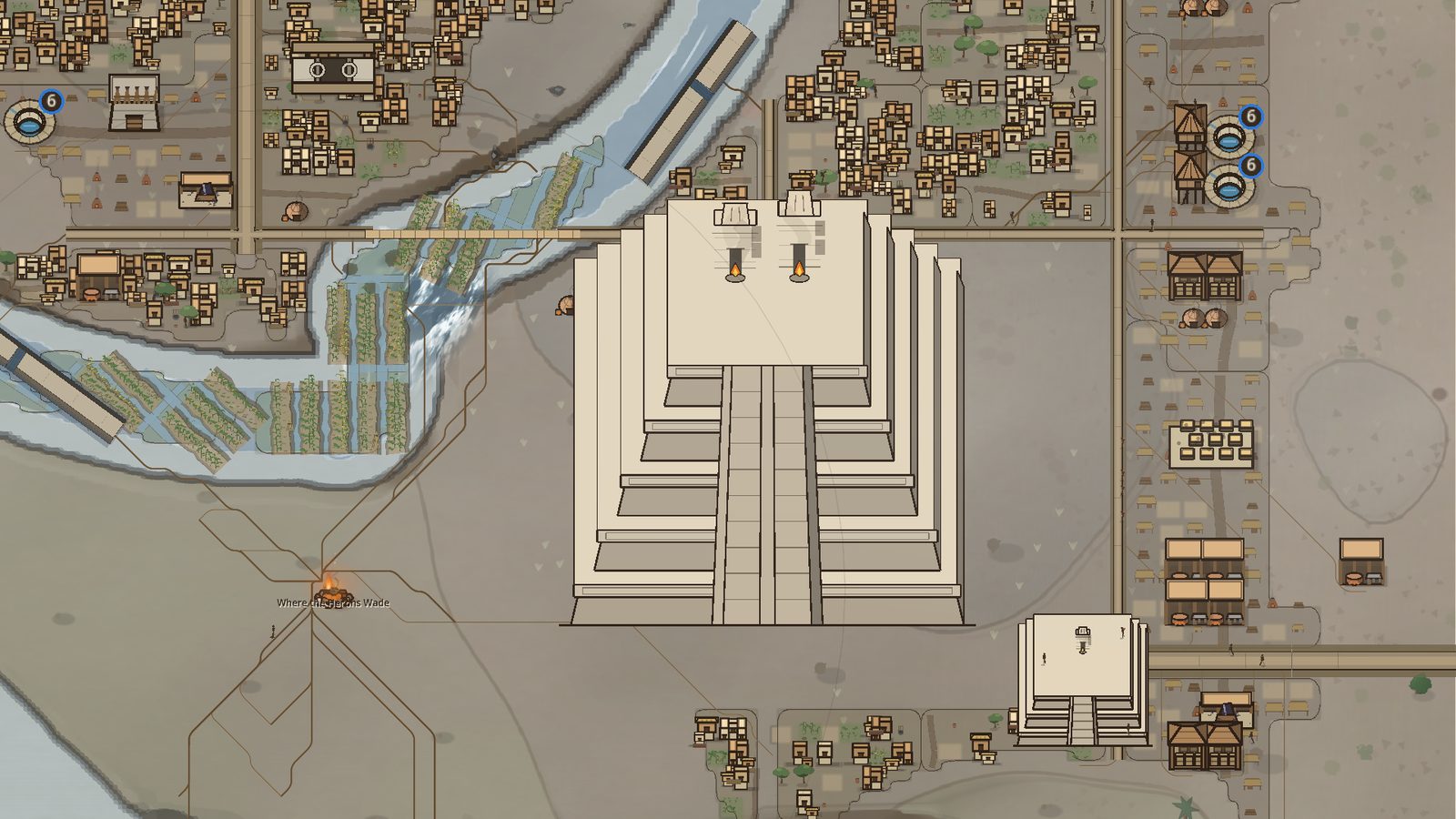
About the game
Choose a people and settle a new land: Europeans cross the sea, native peoples come overland through the river country. Clear the ground, raise your buildings, and feed your people through the seasons.
There is nothing to win and no score. What there is instead is loss: hunger, sickness, unrest and hard winters can end a colony you spent hours building.
- Native and European peoples play by different rules that never merge. Native colonies cannot build a smithy or a loom, so iron and cloth come only by trade.
- Food is raw, prepared or preserved, and each spoils at its own rate. The Tupiya staple, bitter manioc, feeds no one until it is grated, pressed and toasted into flour.
- Each landing place has its own climate calendar, with its own farming seasons and dangers.
- One hand-drawn woodcut style, dark ink on warm parchment, across every map, menu and card.
One continuous map
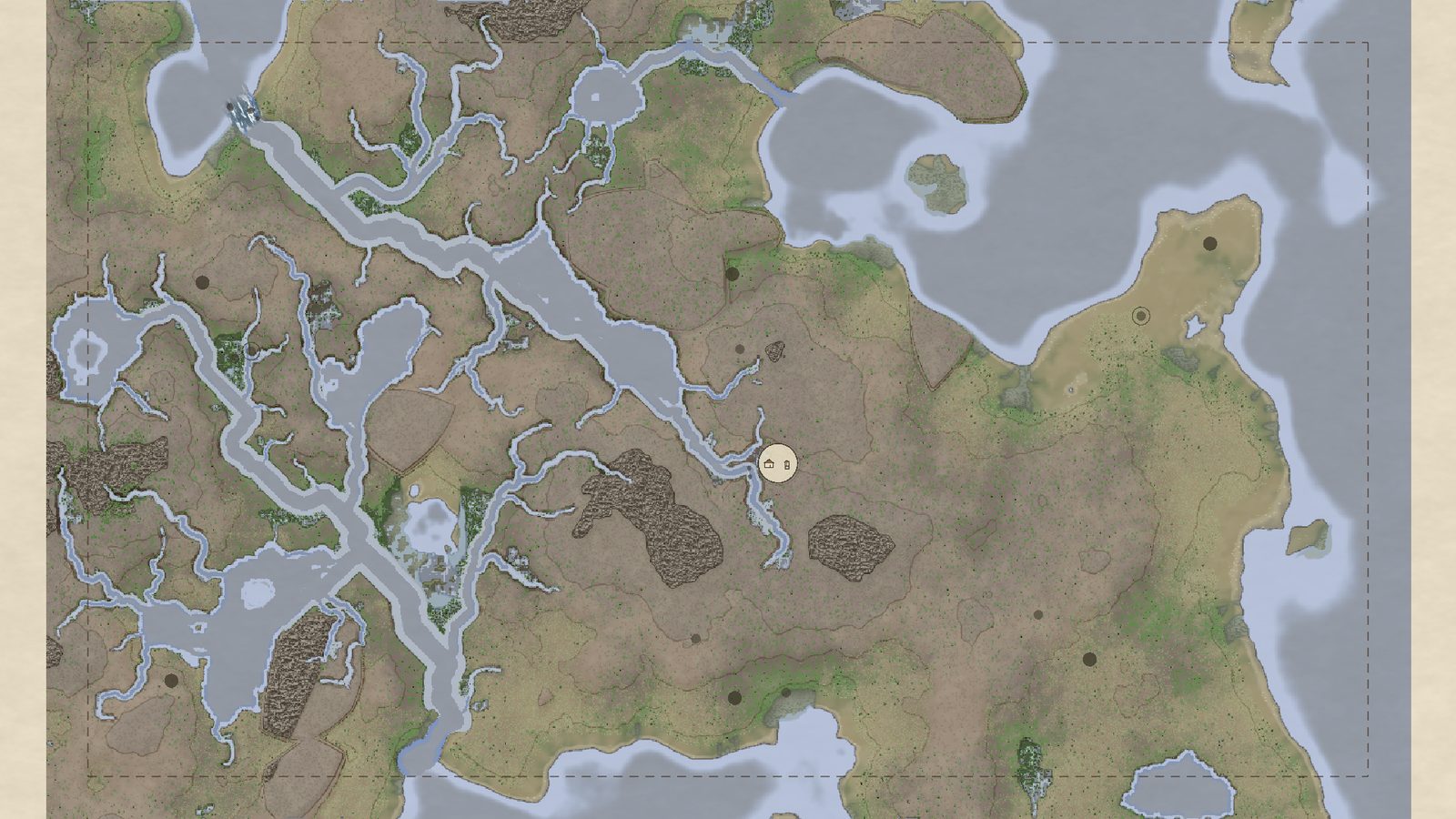
The world is a single piece of country, drawn at one scale. Zoom from the whole land down to a single roof without a cut, and march your people across it under fog.
Two peoples, nothing alike
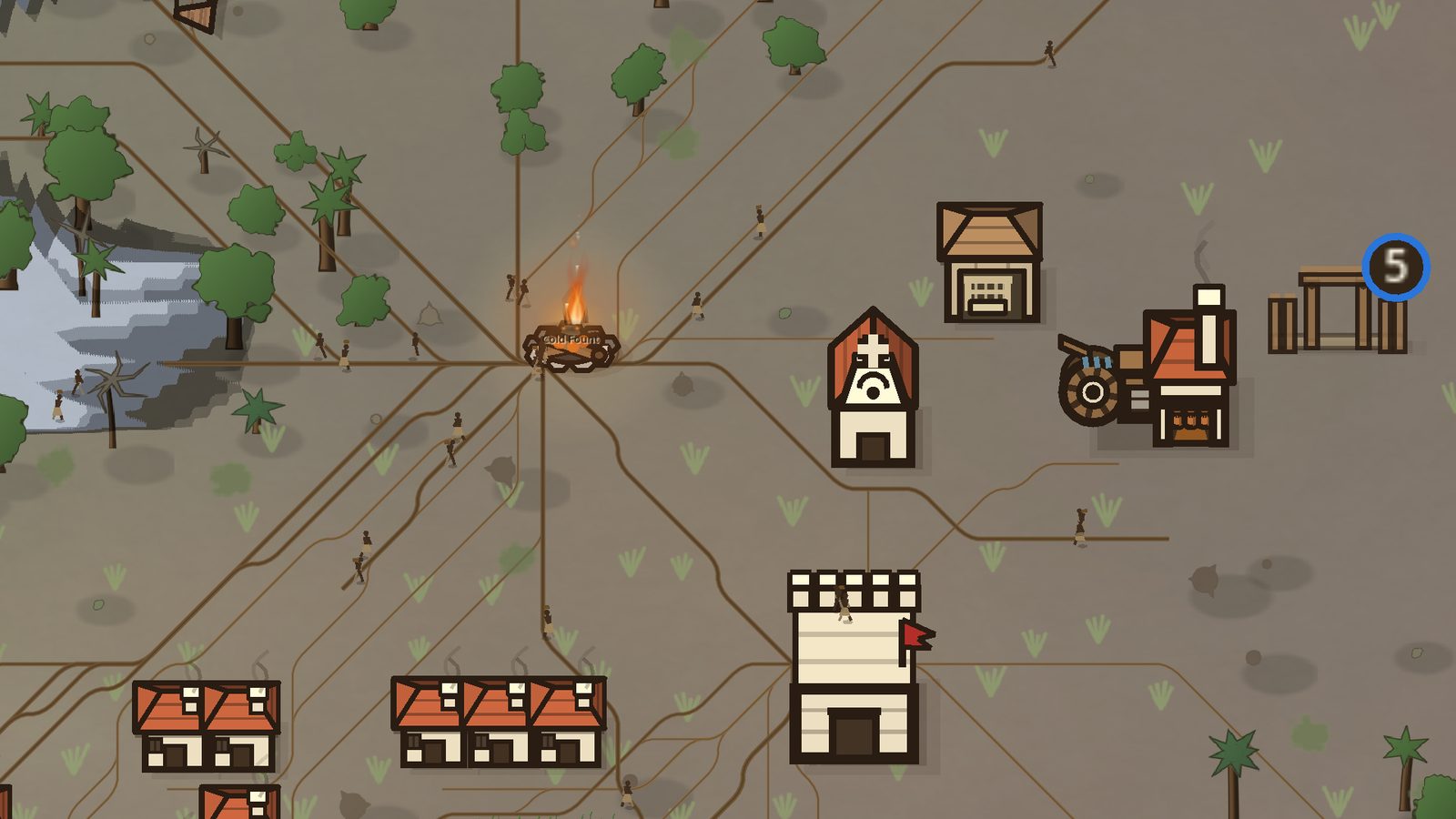
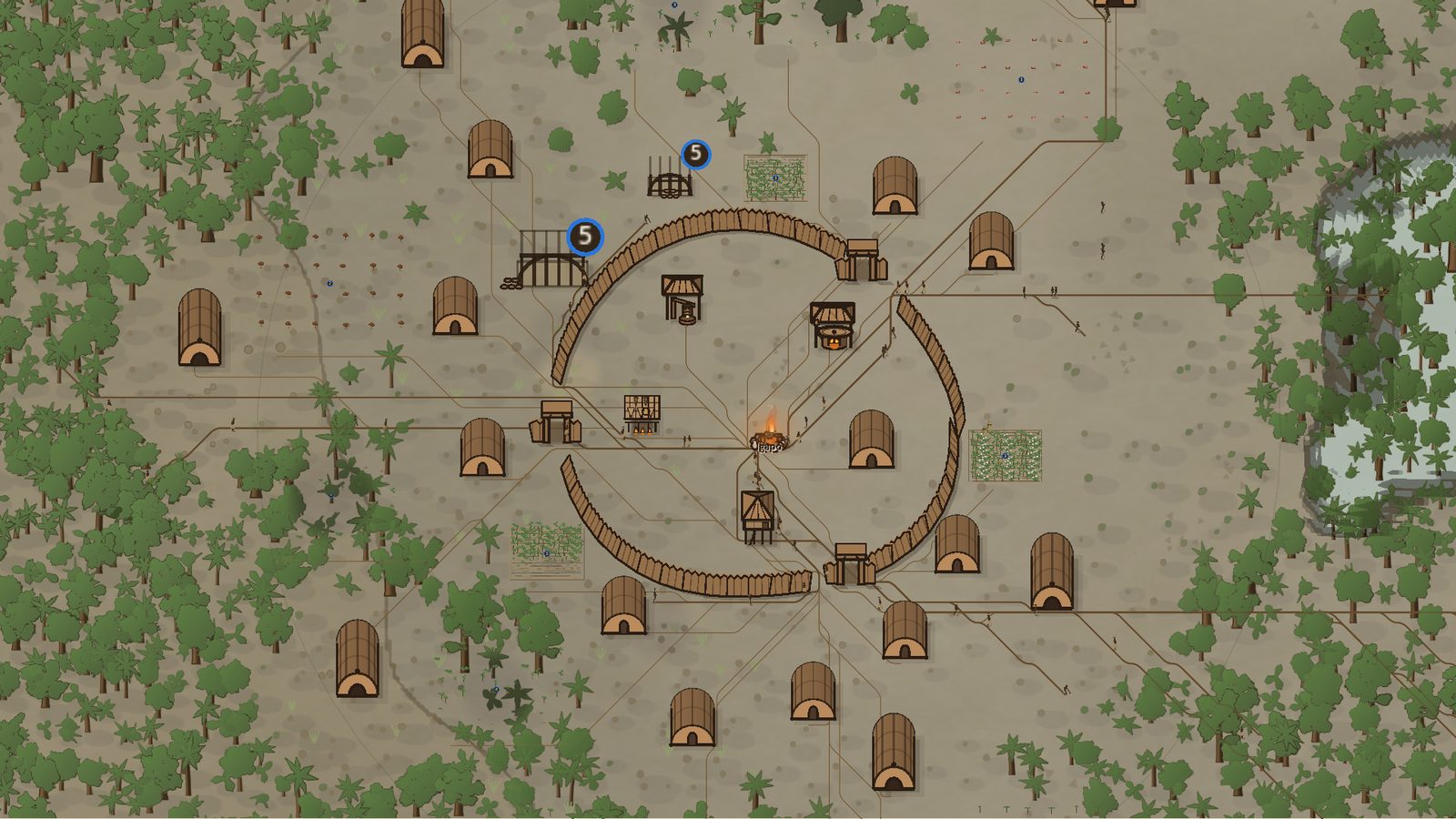
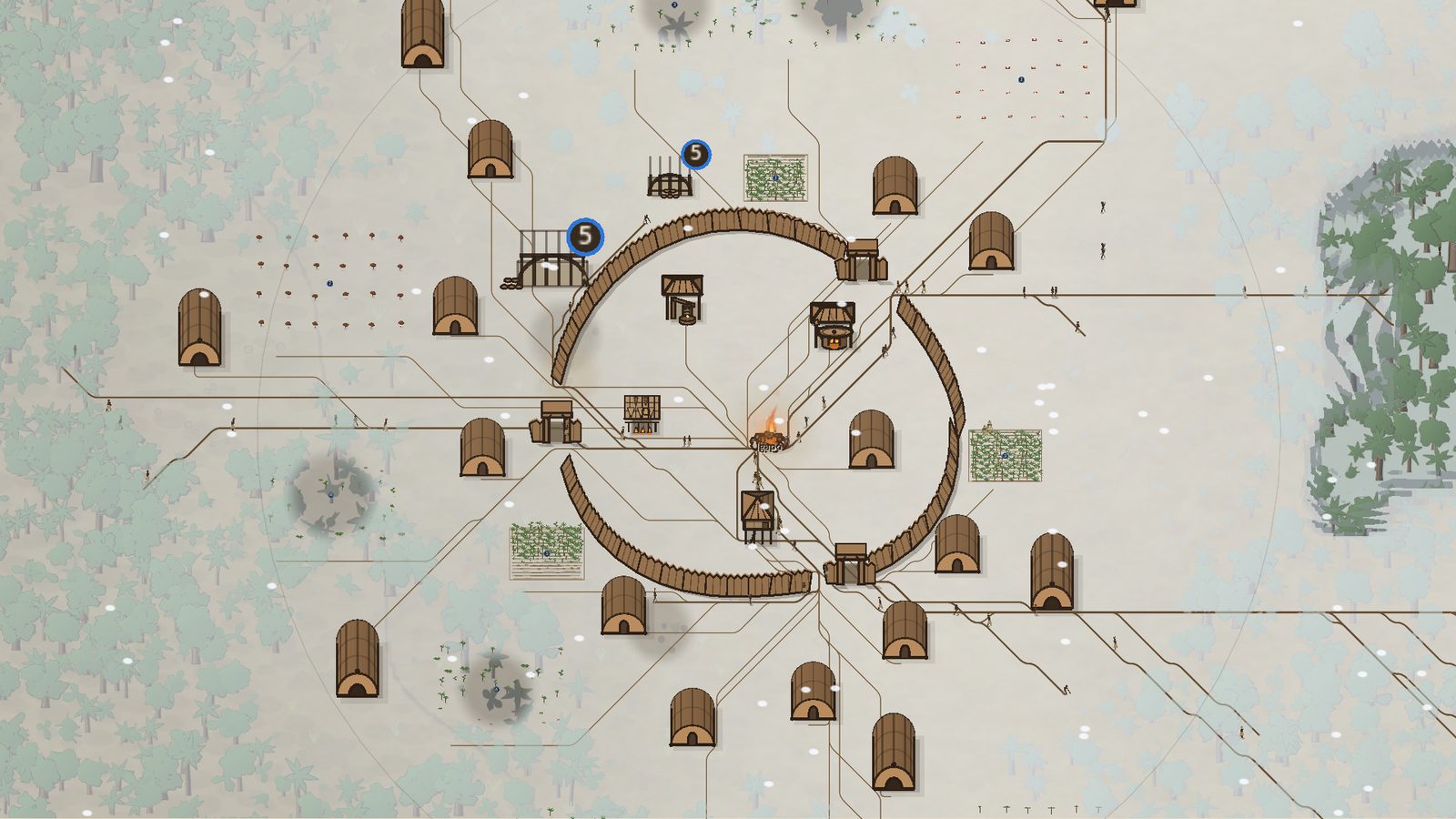
A Tupiya village is a ring of longhouses in the forest. A Portuguese colony starts with a ship from Lisbon. Each people has its own buildings, goods and path through the game.
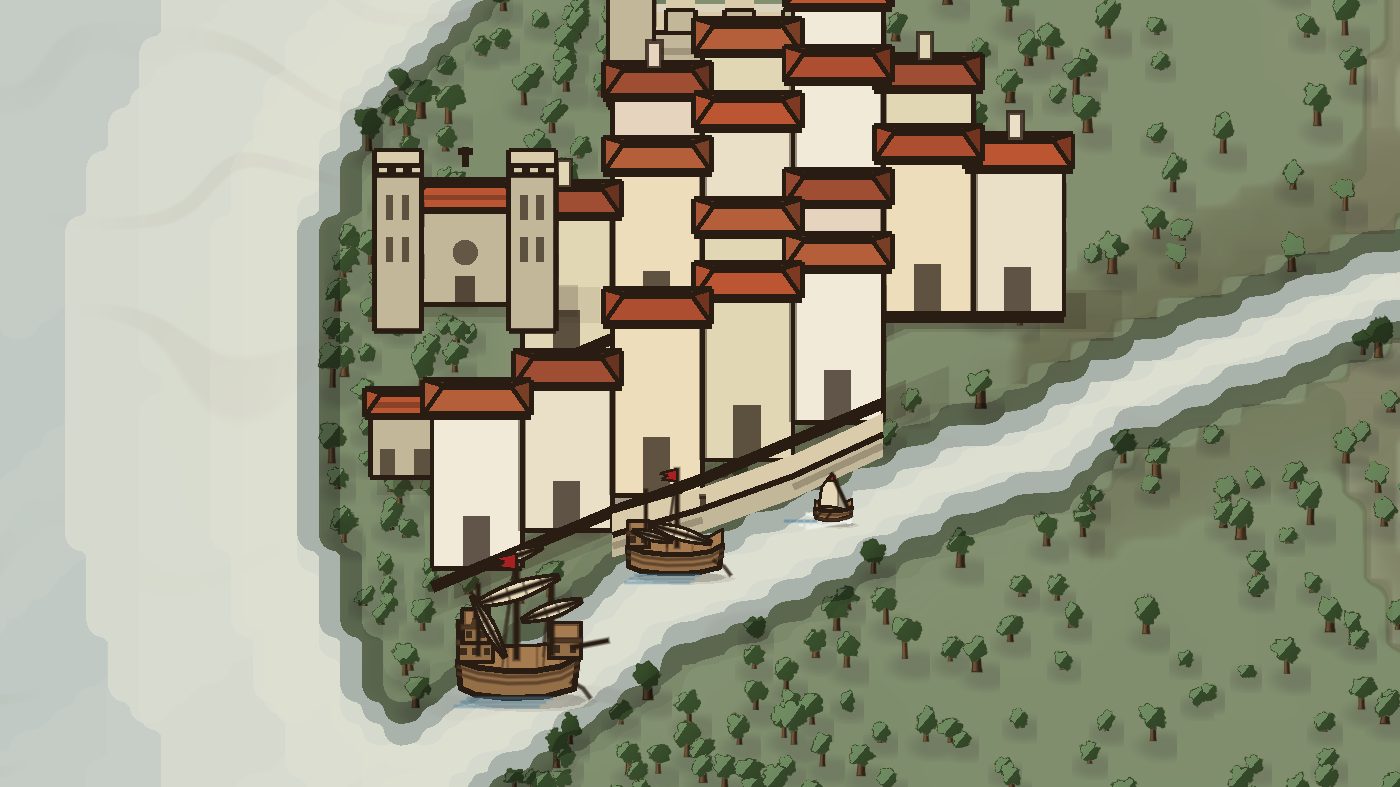
The year turns
Seasons change the ground under you. Store food against the winter, or a full storehouse of the wrong food will not save you.
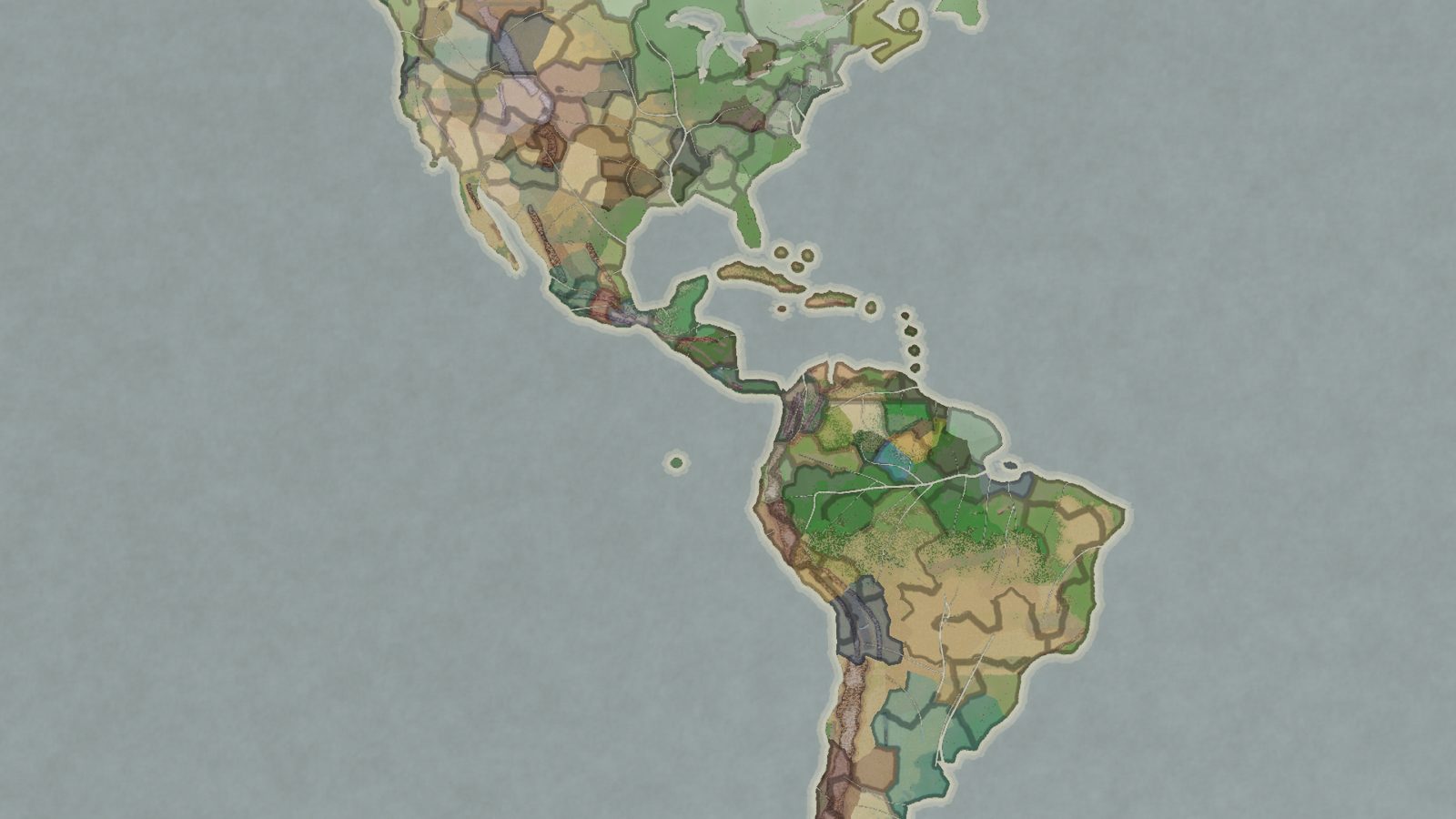
The New World chart
Pick your people, your port and your landfall on a chart of the Americas. In a campaign, what you learn carries from one colony to the next.
Facts
- Setting
- The Americas in 1500
- Genre
- Colony sim and strategy
- Platforms
- Windows (Steam)
- Developer
- Hearth Interactive
From the library: Early Americas
Writing and pictures by and about the peoples of the Americas, from the Norse voyages around 1000 to the last first meetings of the late 1700s, read in the original languages and in English. A companion to our game The Lost Settlement, set in the Americas in 1500.
- Karlsefni and Gudrid in VinlandSaga of the Greenlanders, 1000–1010, in Old Norse
Þat sama sumar kom skip af Noregi til Grenlandz. sa madr het Þorfinnr kallz efnni er þui skipe styrde. hann var son Þordar hesthofda Snorra sonar Þordar sonar fra Hofda. Þorfinnr k…
- Trade and Battle at HópSaga of Erik the Red, 1005–1010, in Old Norse
Ok einn morgin snemma, er þeir lituðuz um, sáu þeir níu húðkeipa, ok var veift trjánum af skipunum, ok lét því líkast í, sem í halmþustum, ok fer sólarsinnis. Þá mælti Karlsefni: H…
- News of the First VoyageColumbus, 1492–1493, in Spanish
Señor: Porque sé que habreis placer de la grande vitoria que nuestro Señor me ha dado en mi viage vos escribo esta, por la cual sabreis como en veinte dias pasé las Indias con la a…
- The Second Voyage Reaches the Islands of the CaribsChanca, 1493, in Spanish
Este dia primero que allí decendimos andaban por la playa junto con el agua muchos hombres é mugeres mirando la flota, é maravillándose de cosa tan nueva, é llegándose alguna barca…
- A Short Account of the Destruction of the Indies (Opening)Las Casas, 1493–1542, in Spanish
Descubriéronse las Indias en el año de mil y quatrocientos y noventa y dos. Fuéronse á poblar el año siguiente de Cristianos Españoles, por manera que ha 49 años que fueron á ellas…
- The Images in the FieldPané, 1495–1497, in Italian
Et dicono, questo Cacique hauere affermato di hauer parlato con Giocauuaghama, il qual gli haueua detto, che qualunque dopò la sua morte fosse restato viuo haurebbe goduto poco tem…
- The First Meeting at Porto Seguro, 1500Caminha, 1500, in Portuguese
e daly ouvemos vista de homeens que amdavam pola praya obra de sete ou oito, segundo hos navios pequenos diseram por chegarem primeiro aly. Lamçamos hos batees, e esquifes fóra, e …
- The Gilded Chief of Lake GuatavitaRodríguez Freyle, 1500–1537, in Spanish
Mis padres fueron de los primeros conquistadores i pobladores de este Nuevo Reino. Fué mi padre soldado de Pedro Ursua, aquel a quien Lope de Aguirre mató despues en el Marañon, au…
- Maize and Cassava BreadOviedo, 1514–1526, in Spanish
En la dicha isla Española tienen los indios y los cristianos, que después usan comer el pan de estos indios, dos maneras de ello. La una es maíz, que es grano, y la otra cazabi, qu…
- The Great Market of TenochtitlanCortés, 1519–1520, in Spanish
Tiene esta ciudad muchas plazas, donde hay continuos mercados y trato de comprar y vender. Tiene otra plaza tan grande como dos veces la de la ciudad de Salamanca, toda cercada de …
- The Mexica Embassy and the Smallpox in MichoacánRelación de Michoacán, 1520, in Spanish
Pues vinieron los que habian inviado á Méjico, y fueron delante el cazonci y mostráronle otro presente que le inviaba Montezuma de mantas ricas y mástiles y espejos, y saludáronle,…
- The Pestilence at IximcheXahil family annals, 1520–1521, in Kaqchikel
127. Chupam <J-a voo huna, vae ok ixtiquer yauabil, yxnu^-ahol, nabey xyabix ohb, ratzam xyavabix chi^-a £ana chuluh, kitzih tixibin chi camic xi^-o oher. Haok xcam ahauh Vakaki Ah…
- The Smallpox in Mexico, 1520Sahagún, 1520–1521, in Spanish
Cuando los Españoles salieron de México, y fueron á Tlaxcalla era el mes que se llamaba Tecuilhuitentti que comienza á dos de junio, y llegado el mes siguiente ellos llamaban Hueyt…
- Naked and Starving on the Gulf CoastCabeza de Vaca, 1528, in Spanish
…[ha]bian prometido, y nos trajeron mucho pescado y de unas raíces que ellos comen, y son como nueces, algunas mayores ó menores; la mayor parte de ellas se sacan de bajo del agua …
- Inca Storehouses and the Palaces of TumebambaCieza de León, 1530–1548, in Spanish
En algunas partes deste libro he apuntado el gran poder que tuvieron los ingas reyes del Perú, y su mucho valor, y como en mas de mil y docientas leguas que mandaron de costa tenia…
- Winter at Stadacona and the Cedar CureCartier, 1535–1536, in French
Au mois de Décembre fumes avertis que la mortalité s'estoit mise au peuple de Stadacona, tellement que jà en éstoient morts par leur confession plus de cinquante. A cause de quoi, …
- The Lady of Cofitachequi, 1540Gentleman of Elvas, 1540, in Portuguese
e tanto q viera partio pera Cutifachiqui, no caminho se tomaram tres indios, os quaes dissera que a senora daqlla terra tinha ja dos christãos noticia e os estaua esperado em hú po…
- The Bison Plains and the People Who Follow the HerdsCastañeda, 1541, in Spanish
dicho abemos de lo poblado de altos que segun parese esta en el comedio de la cordillera en lo mas llano y espaçioso de ella porque tiene de atrabesia çiento y sinquenta leguas has…
- Maize, Markets and Books in YucatánLanda, 1549–1566, in Spanish
Que los officios de los indios eran olleros y carpinteros, los quales por hazer los ídolos de barro y madera con muchos ayunos y observancias ganavan mucho. Avia también cirujanos,…
- The People Made of MaizePopol Vuh, 1550–1715, in K’iche’ Maya
Vae cut u tiqeric ta x-naohix vinak, ta x-tzukux puch ri ch’oc u tiohil vinak. X-e cha cut ri Alom, Qaholom, e Tzakol, Bitol, Tepeu, Gucumatz, qui bi: Mi-x-yopihic u zakiric; mi-x-…
- The Unconquered People of AraucoErcilla, 1550–1558, in Spanish
No las damas, amor, no gentilezas de caballeros canto enamorados; ni las muestras, regalos, ni ternezas de amorosos afectos y cuidados: mas el valor, los hechos, las proezas de aqu…
- Brought to Ubatuba as a Captive, 1554Staden, 1554, in German
Desselbigen tages ungeferlich nach der Sonnen zurechnen, wars umb vesperzeit, als wir ire wonungen sahen, waren also drey tage auff der heimfart gewesen. Dann es waren dahin ich ge…
- Making Manioc Flour in a Tupinambá VillageLéry, 1557–1558, in French
Puisque nous avons entendu, au precedent chapitre, comme nos sauvages sont parez & equippez par le dehors, il me semble en deduisant les choses par ordre, qu'il ne conviendra pas m…
- Bloody Point and the Two CaptivesBest, 1577, in English
But they having quickly descried our companie, launched one great and another small boate, being about 16 or 18 persons, and very narrowly escaping, put themselves to sea. Whereupo…
- The Sickness That Followed the EnglishHarriot, 1585–1586, in English
One other rare and strange accident, leauing others, will I mention before I ende, which mooued the whole countrey that either knew or hearde of vs, to haue vs in wonderfull admira…
- Into the Orinoco DeltaRaleigh, 1595, in English
But this it chanced that entring into a riuer, (which bicause it had no name we called the riuer of the Red crosse, our selues being the first Christians that euer came therein:) t…
- How the Angola Trade Fed CartagenaSandoval, 1600–1625, in Spanish
Pero en lo que toca al rescate de esta tierra, que parece que el Padre se escusa de tratarlo. Digo, que en vna ocasion se me lamentaua vn Capitan de vna armazon de negros, que traí…
- Champlain Fights beside the Algonquin and WendatChamplain, 1609, in French
Or comme nous commençasmes à approcher à quelques deux ou trois journées de la demeure de leurs ennemis, nous n'allions plus que la nuit, & le jour nous nous reposions, neantmoins …
- The Mi'kmaq and the French, and the Sickness among ThemBiard, 1611–1613, in French
Ils s'estonnent & se plaignent souuẽt de ce que dés que les Frãçois hantent & ont commerce auec eux, ils se meurent fort, & se depeuplent. Car ils asseurent qu'auant ceste hantise,…
- The First Winter and Squanto's CornBradford, 1621, in English
But that which was most sadd & lamentable was, that in 2. or 3. moneths time halfe of their company dyed, espetialy in Jan: & February, being ye depth of winter, and wanting houses…
- Corn, Land, and the Women's FieldsWilliams, 1631–1643, in English
Aûke, and Sanaukamuck, Earth or Land. Níttauke, Nissawnâwkamuck, My Land. Wuskâukamuck, New ground. Aquegunnítteash, Fields worne out. Mìntúck-quash, Trees. Pauchautaqunnêsash, Bra…
- The Wendat Feast of the DeadBrébeuf, 1636, in French
Les sept ou huict iours de deuant la feste se passerent à assembler, tant les ames, que les Estrangers, qui y furent inuitez; cependant depuis le matin iusques au soir, ce n'estoit…
- Food from the Great River, 1639Acuña, 1639, in Spanish
Todo este Rio está poblado de Islas, vnas grandes, pequeñas otras, tantas en número que no se pueden contar, porque se encuentran á cada paso; las ordinarias son de quatro, ó cinco…
- A Winter of Famine by Lake SuperiorRadisson, 1659–1660, in English
We are come to the small lake, the place of rendezvous, where we found some company that weare there before us. We cottage ourselves, staying for the rest, that came every day. We …
- The Death of the Tattooed SerpentLe Page du Pratz, 1725, in French
Mon ami se leva assez précipitamment & paroissoit avoir quelque chagrin ; je l'arrêtai pour lui en demander la raison : il me répondit avec un air triste que le Serpent Piqué étoit…
- A Visit to the Great Camp on the PlainsHenday, 1754, in English
13. Sunday. Travelled 7 Miles S.W.b.W. Level land, and ledges of woods; and numbers of Buffalo. Indians killed a great many. In the evening we were joined by 7 Archithinue Natives …
- Peace in the Town-House at ChotaTimberlake, 1761, in English
We were received at Tommotly in a very kind manner by Ostenaco, the commander in chief, who told me, he had already given me up for lost, as the gang I parted with at the Great Isl…
- Trading with the Tlingit at Lituya BayLa Pérouse, 1786, in French
Pendant notre séjour forcé à l'entrée de la baie, nous avions sans cesse été entourés de pirogues de sauvages. Ils nous proposaient, en échange de notre fer, du poisson, des peaux …